

Why Choose Us?
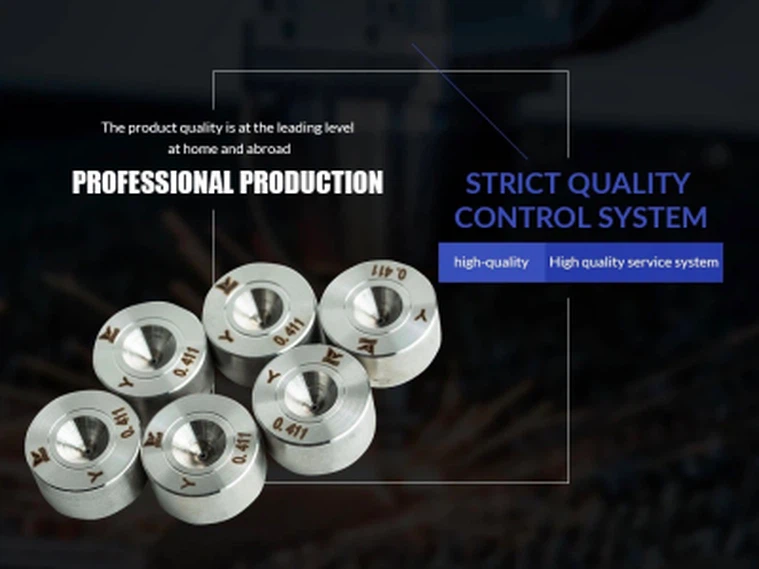
Anhui Liyuan Wire Drawing Dies Co, Ltd. is the industry's leading manufacturer and supplier of wire drawing dies, SSCD wire drawing dies, ND wire drawing dies, special-shaped dies and other products. Our product range is wide and includes the following derivative products: wires and cables, electrical alloys, magnet wires, tungsten wires, molybdenum wires, etc. At present, we have introduced professional production and testing equipment from the Norwegian "CONOPTLCA" and the German "SCOB" companies. We ensure that the production and quality inspection processes of all products are strictly in accordance with IS09002 standards.
Rich Products
Our products are rich in variety and can be used to pull out various metal materials with specifications ranging from 0.01mm to 6.0mm, which can be used in copper wires, alloy copper wires, copper carbon wires and various coated wires.
Professional Service
Our team has many years of export experience and can provide comprehensive product consultation, transportation tracking and warranty services. If we have any issues within one year from the date of purchase, we will respond quickly and cover the shipping costs and send a replacement.
Quality Certification
Our company strictly controls product specifications and quality during the production process, and produces in accordance with IS09002 standards.
No.1 Sales Volume
Our company is China's largest wire drawing die export factory and has introduced imported production and inspection equipment, supporting mass ordering and customized services.

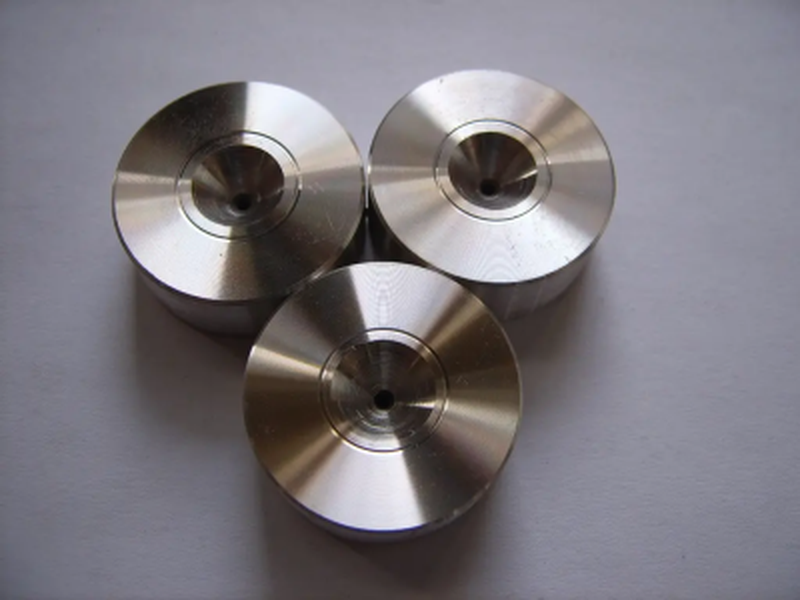
A tubing die is a device used to shape and finish metal tubes. It cuts, shapes, sizes, and forms the tube into its desired form. The die typically has hardened cutting edges to ensure precise results for every step of the process. Tubing dies can be used on many types of tubing from soft aluminum alloys to titanium-based alloys and hard stainless steel alloys.

What is Tubing Die?
A tubing die is a part of a tube bending machine that helps bend a metal tube or pipe. The dies are applied on the bending press and external force is applied to bend the pipe or tube around the die's circumference. Tubing dies allow tube manufacturers to meet surface quality and dimension standards, are commonly used to reduce the diameter of various ferrous and non-ferrous rods and tubes. Their applications include automotive, medical wire, superconducting, and welding wires.
Features of Tubing Die
High Efficiency
Our pipe mold has a polished and smooth feed opening, and the extended parts on both sides have inclined wedge-shaped table tops, making it smoother and faster for processing materials to enter and exit.
Rich Specifications
Our pipe molds are available in a wide range of sizes and can be made in sizes ranging from 1/4" - 4" or larger to pull out metal pipes of different diameters
Wear-resistant
These molds are treated with a coating process, using chemical vapor deposition (CVD) or physical vapor deposition (PVD) to add titanium, molybdenum, tungsten and sulfide coatings to the surface to make them more wear-resistant.
High Compatibility
These molds are compatible with wires of various materials, including steel wire, stainless steel wire, copper wire, aluminum wire, tungsten wire, and various other non-ferrous metal wires.
Applications of Tubing Die
Automotive Industry
In the automotive industry, tube wire drawing is a vital process used for creating a variety of components, from body parts like doors and hoods to smaller components like fuel tanks, mufflers, and engine parts. The ability of this process to produce lightweight, durable, and precisely shaped components.
Aerospace Industry
The process’s ability to produce strong and lightweight components fits perfectly with the industry’s demands. Parts such as fuel tanks, engine components, and fuselage sections are typically produced using the metal drawing process.
Consumer Goods and Appliances
It is extensively used in the production of consumer goods and appliances. Everything from kitchen utensils to electronics enclosures, and from lighting fixtures to watch casings, are produced using this versatile process.
Medical Equipment Manufacturing
In the medical field, the drawing process is used to produce surgical instruments, implantable devices, and equipment casings. The high precision and cleanliness of this process make it ideal for the stringent standards of the medical industry.
Types of Tubing Die
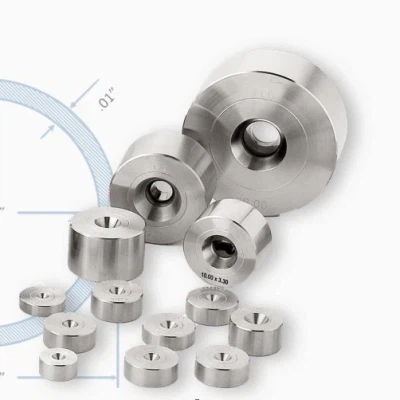
Round Tubing Die
This is the most common type of tubing die and is used to produce round tubes of different sizes and thicknesses, including structural and ornamental tubing. Round metal tubes are used in a wide variety of applications, but it’s most commonly used for moving fluids. Coils of metal are processed into a sheet and formed into a circle before being welded.
Unlike rectangular tubing, round tubing has one continuous surface with no edges. When put under stress, pressure is evenly distributed. This reduces the chance for unwanted bends, breaks, and crimping. Compared to rectangular tubing, cylindrical tubing is stronger as it has no weak points from corners and consistent strength along its interior and exterior surfaces. It’s also more resistant to flexing and torsional twisting under weight.
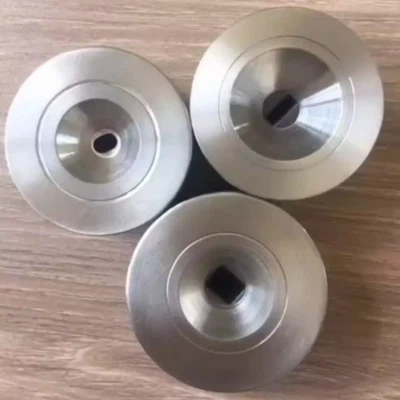
Square Tubing Die
It is designed to produce square-shaped tubes for use in various industries such as construction, manufacturing, and furniture making. Square tubing requires more work to manufacture, though it doesn’t require as much specialized measuring when compared to round tubing. In singular, unbent pieces, square tubing offers superior strength. That’s why it’s used in building construction or to create barriers.
Its vertical edges coupled with the way it distributes tension causes square tubing to lose some of its strength when under pressure. Stress on square tubing makes it more susceptible to distortions such as rippling and buckling.
Rectangular Tubing Die
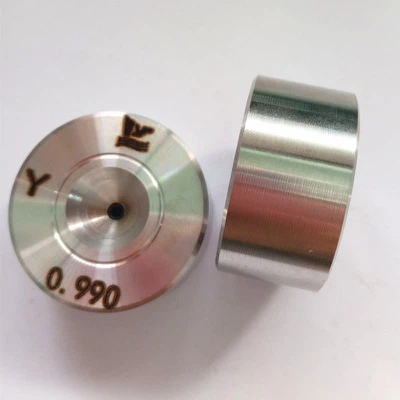
This type of die is used to produce rectangular-shaped tubes, which are often used in construction for beams and columns. It is also used in the automotive industry for frames, and in furniture making for benches and tables.
A large number of these pipes used to transport fluids, such as petroleum, natural gas, water, gas, steam, etc. In addition, when the bending and torsional strength are the same, the weight is light, so it is also widely used in the manufacture of parts in engineering structure.
Oval Tubing Die
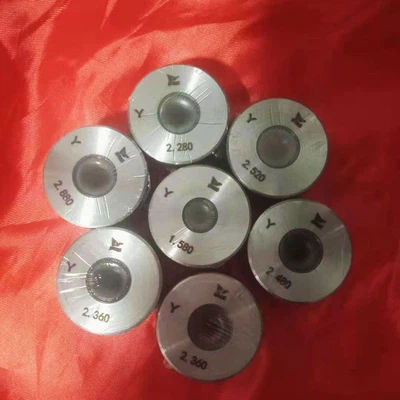
This die is designed to produce oval-shaped tubes for use in fitness equipment, bike frames, and other applications that require curved or irregular shapes.
Structural round or oval tubing is commonly used in construction, manufacturing, and other industries. Round tubing has a circular cross-section, while oval tubing has a more oblong, elliptical shape.
Factors To Consider When Choosing Tubing Die
Center Line Radius (CLR)
Achieved CLR
Inner Radius
Outer Radius
Wall Thickness
Degree of Bend
Spring-back Factor
What You Should Know When Use Tubing Die?
One of the first steps in die maintenance should be removing any debris and dirt that has built up on the die, including the chambers where off-cuts and trimmings are stored. Cleaning your die is one of the most straightforward die maintenance measures to implement, and it has significant benefits for your die, including:
Prevents friction that may slow down material moving between stations.
Increases precision by stopping material from being displaced by debris while being cut.
Reduces chamber clogging that can slow down production.
Ensures operators can spot any problem areas or concerns easily.
Keeps equipment sharp and in top condition.
Another crucial part of die management is regular inspections of your die. Inspections help operators identify any equipment that needs to be replaced, equipment that needs sharpening or other concerns that may impact the functioning and output of your machine. These problems can then be dealt with and corrected before they become larger production problems later on. Here are a few of the most important things to look for:
Loose or missing fasteners, dowel pins and galled die sections
Worn, blunt, chipped, cracked or dented parts that need sharpening, refinishing or replacement
Adequate lubrication in high-friction areas, including die mating surfaces
Broken or missing parts such as springs
Wheels, dies and belts moving incorrectly
Missing safety guards or cutting punches
Operating a die with blunt, worn, missing or loose parts can result in inconsistent cutting or folding, including frayed edges.
Sharpening
Blunt or dull dies can cause various issues, including substandard products, burrs, feeding problems and other safety issues that slow production and waste materials. Implementing a regular sharpening routine ensures you avoid these issues and improves the life span of a die. When sharpening a die, it is vital that you use the right grinding wheel and cutting shear. Using the incorrect grinding wheel and method can result in excess heat building up in the die, causing it to soften and crack.
Alignment and Recalibration
A die’s regular, repetitive movements can cause it to become misaligned over time. A few microinches can result in drastic changes to your product. It is essential to monitor the alignment of dies and recalibrate them as needed to maintain high levels of precision.
Repairs and Replacements
The biggest part of die management is repairing and replacing broken, worn or missing parts. A well-defined die maintenance schedule can ensure repairs and replacements are done before the damaged or missing component evolves into a larger problem. A proper tool room management system also ensures you have the parts to limit downtime.
Certificate Photo

Our Factory Photo

Frequently Asked Questions of Tubing Die
Q: Why we use tubing drawing die?
Q: What materials are commonly used to make tubing drawing dies?
Q: How does a tubing drawing die work?
Q: What are the different types of tubing drawing methods?
Q: What factors affect the performance of a tubing drawing die?
Q: What are the advantages of using a tubing drawing die compared to other forming methods?
Reduced drawing force
Reduced risk of tube rupture
Precise dimensions
Good surface finish
Added strength
Fewer internal stresses
Q: What is the process of drawing metal?
Q: What is the role of lubricants in tubing drawing?
Q: What are the most common lubricants used in tubing drawing?
Q: What are the limitations of tube drawing?
Q: How can die design affect tubing drawing performance?
Stress: Reducing the total drawing stress can prevent the tube from fracturing.
Surface finish: A long land and low lead in angle can improve the surface finish.
Weld quality: A porthole die can improve the welding quality of the tube.
Kink resistance: A spiral-mandrel die can produce tubing that is more resistant to kinking.
Q: What are the different stages involved in using a tubing drawing die?
Pointing: The end of the material is reduced to a smaller diameter so it can pass through the die.
Drawing: The material is inserted into the die and the jaw grips the end to start the drawing process.
Drawing through the dies: The tubing is drawn through a die, with or without a mandrel.
Q: How does friction affect metal forming processes?
Q: How does the size of the die affect the size and shape of the tube produced?
Q: What is the reduction ratio of drawing?
Q: What is the maximum reduction in tube drawing?
Q: What are the defects of metal drawing process?
Q: How can the hardness of the die affect the performance of the tubing drawing process?
Q: What defects do cold drawn products suffer from?
Q: What is the relationship between the angle of the die and the angle of the tube produced?
We're well-known as one of the leading tubing die manufacturers and suppliers in China. Please rest assured to wholesale high quality tubing die at competitive price from our factory. Contact us for customized service.
