

Why Choose Us?
Anhui Liyuan Wire Drawing Dies Co, Ltd. is the industry's leading manufacturer and supplier of wire drawing dies, SSCD wire drawing dies, ND wire drawing dies, special-shaped dies and other products. Our product range is wide and includes the following derivative products: wires and cables, electrical alloys, magnet wires, tungsten wires, molybdenum wires, etc. At present, we have introduced professional production and testing equipment from the Norwegian "CONOPTLCA" and the German "SCOB" companies. We ensure that the production and quality inspection processes of all products are strictly in accordance with IS09002 standards.
Rich Products
Our products are rich in variety and can be used to pull out various metal materials with specifications ranging from 0.01mm to 6.0mm, which can be used in copper wires, alloy copper wires, copper carbon wires and various coated wires.
Professional Service
Our team has many years of export experience and can provide comprehensive product consultation, transportation tracking and warranty services. If we have any issues within one year from the date of purchase, we will respond quickly and cover the shipping costs and send a replacement.
Quality Certification
Our company strictly controls product specifications and quality during the production process, and produces in accordance with IS09002 standards.
No.1 Sales Volume
Our company is China's largest wire drawing die export factory and has introduced imported production and inspection equipment, supporting mass ordering and customized services.


Shape die is a tool used in metalworking to cut and form metal into a specific shape or size. Shape dies are commonly used in stamping, piercing, coining and other processes. They can be formed by cutting with a CNC machine, or forged through heat and hydraulic pressure.

What is Shape Die?
Shape dies are a set of dies that bends, presses, draws, or hammers a material to a required form in a press or hammer. They are used to reduce the diameter or to transform one wire shape into another. They come in a variety of shapes and sizes, such as circles, squares, hexagonal. Their applications include various types of ferrous and non-ferrous rods and wires, and can create intricate shapes and designs and can be used over and over again.
Features of Shape Die
Seamless Look
The parts or components produced by our special-shaped molds are drawn and extruded from a single blank without obvious seams, making the surface smooth and beautiful.
High Efficiency
These dies can be used in conjunction with wire drawing machines, making drawing an automated process to produce high-volume products quickly and efficiently.
Stable Operation
Products made from these molds have uniform specifications and diameters, which can effectively reduce the risk of human error.
Multi-Shapes
Our special-shaped molds have multi-shaped mold cores that can create complex shapes of metal rods, including squares, circles, hexagons, etc.
Applications of Shape Die

Tube Drawing
Shape drawing dies are used in the tube drawing process, can be customized to produce tubes of various shapes and sizes. They are used in many section reduction operations and can be used for wire drawing metals, such as copper, aluminum, steel, brass, and copper alloys.

Extrusion
Shape drawing dies are used in the extrusion process to produce metal parts of various shapes and sizes. The die is customized to produce parts with specific cross-sectional profiles.

Automotive Industry
These dies are used in the automotive industry to fabricate parts with complex shapes, such as brakes and suspension components.
The benefits of Shape Die
Material Efficiency
One of the key advantages of the metal drawing process is its efficient use of material. Because it involves pulling a metal bar into a die, the process typically produces very little scrap material. This minimizes waste and makes sheet metal drawing a cost-effective option, particularly for high-volume production runs.
Durability and Strength
The metal drawing process inherently enhances the durability and strength of the formed product. The process of deformation work hardens the metal, making the final product stronger than the original sheet. This increased strength doesn’t come at the cost of added weight, making drawn parts ideal for applications where weight is a critical factor, like in the aerospace and automotive industries.
High Precision and Uniformity
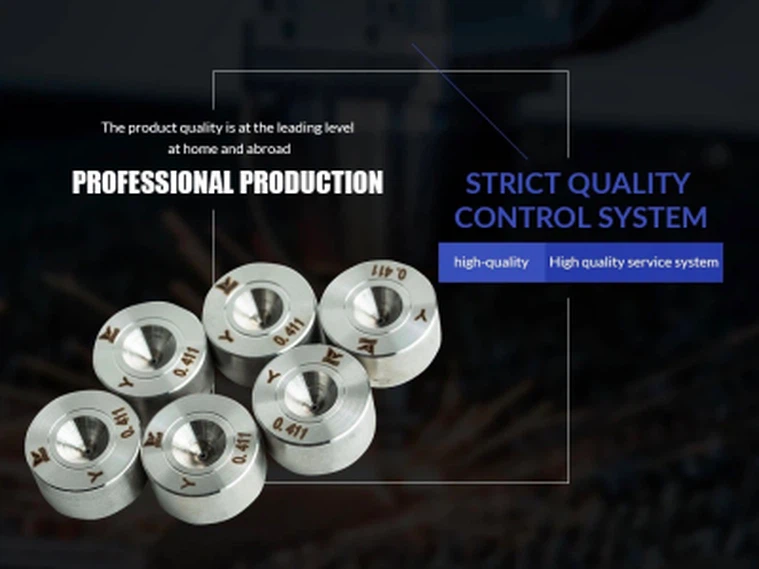
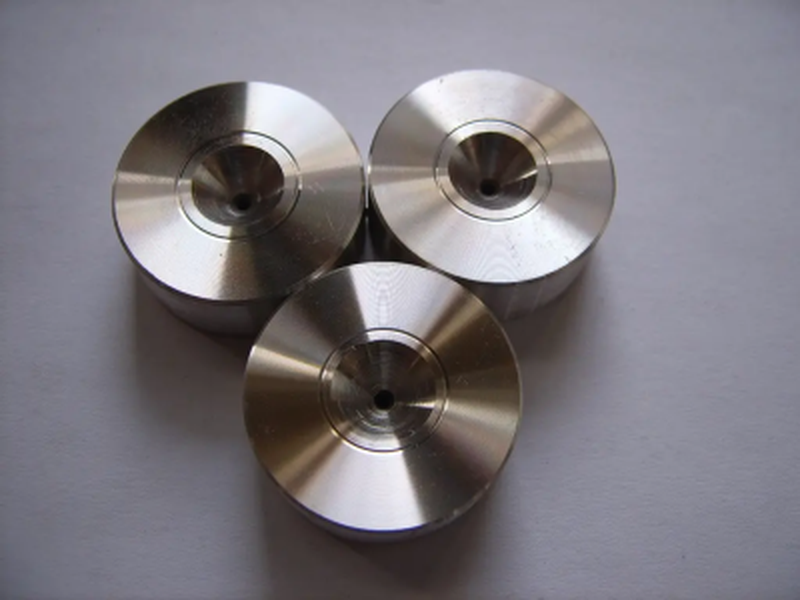
metal drawing is known for producing parts with high precision and uniformity. The use of custom-shaped dies ensures that each product is an accurate replica of the last, making this process particularly suitable for mass production, ensures consistent quality across all products.
Versatility
Sheet metal drawing is a versatile process compatible with various metals, including aluminum, stainless steel, and brass. This versatility allows manufacturers to select the most suitable material for their specific application, considering factors such as strength, weight, cost, and resistance to corrosion.
How To Avoid Defects In Shape Die?
The defects are usually developed concomitantly during the drawing process of metals and alloys. According to the formation mechanism, the flaw can be generally divided into intrinsic and extrinsic defects. The intrinsic ones denote the changes of net residual inhomogeneous displacement fields due to microstructure dynamics during plastic straining. Whereas, the extrinsic defects are the surface changes affected by the mechanical contact including forming tools, frictional conditions, non-homogeneity of forces, material flows and corrosion.
In actual production, the high-precision drawing tools and special lubricants were used to prevent scratches on the surface of the microtube.
A suitable reduction ratio can reduce uneven deformation and excessive residual stress, thereby preventing intrinsic defects from developing into surface cracks and wrinkles.
In addition, the annealing can eliminate work hardening and improve the microstructural property of microtubes, thereby enhancing the forming limit of the tube, and effectively avoiding the occurrence of various defects.
Using Process of Shape Die
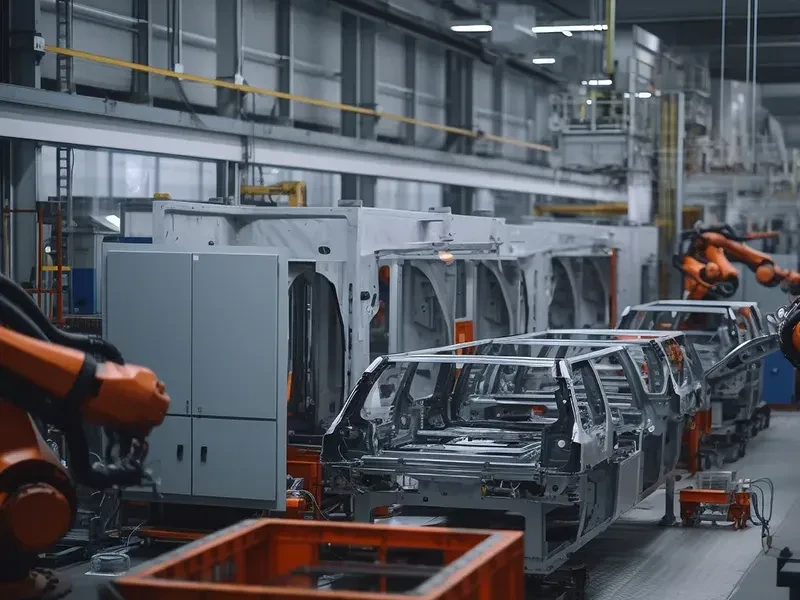
Metal drawing is a transformative process in manufacturing that has revolutionized the way we create a myriad of products. This process involves pulling a flat metal sheet, or blank, into a die via a punch, ultimately forming the metal into the desired shape. A typical metal drawing process involves several distinct steps:
Blank Preparation
Before the process begins, the blank, a flat piece of metal that’s been cut to size, needs to be prepared. This preparation might include cleaning, lubrication, and annealing (a heat treatment process that improves metal’s workability), depending on the specific requirements of the drawing process and the metal used.
Blank Placement
Once prepared, the blank is placed over the die, a device custom-shaped to form the desired product.
Drawing Operation
The punch then pushes into the blank, forcing it into the die. The metal yields to this force and moves plastically along the walls of the die, taking on its shape.
Ejection
After the punch has retracted, the newly formed part is removed from the die, completing the process.
Problems You Should Know When Use Shape Die
Improper Selection of Working Cone Angle
The large working cone angle will cause the wire to enter the wire drawing die at the point of contact very close to the bearing part. That is, the compression zone becomes shorter, causing the wire to deform at a faster rate and generating a lot of heat. It will eventually affect the structure of the wire and increase the consumption of the mold. If the working cone angle becomes larger, it is difficult for the wire rod to smoothly transition to the bearing part. It is easy to cause the wire to be concave, resulting in diameter reduction, and even diameter reduction or ellipse phenomenon.
The small working cone angle results in the incoming wire contact point being close to the upper end of the working cone. Then, the extension of the deformation zone increases the residual work and heat generated by the wire drawing machine to the steel wire, and increases the power consumption of the wire drawing machine. In addition to this, the reduction of the lubrication zone reduces the lubrication effect. It will eventually lead to poor lubrication, resulting in metal chips and broken wires, overheating, and shrinkage.


Center Fracture and Crack Phenomenon
During the wire drawing process, the internal structure of the wire extends along the axial direction, and the flow velocity of the structure on the surface of the wire is greater than the flow of the internal structure, and a tensile stress in the axial direction will be generated at the center of the wire drawing die core. When the axial tensile stress exceeds the tensile strength of the drawn material, crack will occur in the core of the material, and in severe cases, cup-cone fracture will occur.
Residual Stress and Work Hardening Phenomena
Residual stress and work hardening are caused by residual work, which aggravates the hardening of the material, which will seriously crack and peel the surface of the wire, making it difficult to draw. If the process arrangement is unreasonable, the residual work will increase, the energy consumption of the equipment will be increased, and the production cost will increase. Therefore, the manufacturers should establish strict mold repair and inspection methods, formulate reasonable drawing processes, and strict quality control to ensure product quality.

Certificate Photo

Our Factory Photo

Frequently Asked Questions of Shape Die
Q: What is a shaped drawing dieuse for?
Q: What are the different material of shaped drawing dies available in the market?
Q: How does a shaped drawing die work?
Q: What are the advantages of using a shaped drawing die in manufacturing?
Reduce the diameter of a wire
Transform one wire shape into another
Produce parts with a high degree of forming accuracy
Minimize defects at the die entrance corners
Q: What materials are commonly used in shape drawing dies?
Q: What is the lifespan of a shaped drawing die?
Q: What are the factors that can affect the performance of a shaped drawing die?
Q: How do you choose the right shaped drawing die for your application?
Part size and shape
Production lot size
Drawing parameters
Die size
Blank material type and thickness
Exit cone type
Q: What are the common shapes that can be produced using a shaped drawing die?
Q: What industries commonly use shaped drawing dies in their manufacturing processes?
Q: What is the difference between a shaped drawing die and a regular drawing die?
Q: What are the die design rules?
No free forming (wrinkles of the second order), the blank holder should be close to the punch contour.
Small, included angles with large drawing depths should be avoided.
Large, round drawing projections, and large, soft excess material areas.
Q: How do you maintain a shaped drawing die?
Q: Can a shaped drawing die be repaired or refurbished?
Q: What are the safety precautions you need to take when working with shaped drawing dies?
Spray fixatives should be used with a spray booth that exhausts to the outside.
Don't blow off excess pastel or charcoal dust with your mouth.
Wet-mop and wet-wipe all surfaces clean of dusts.
If inhalation of dusts is a problem, a respirator may be appropriate.
Q: What are the six common deep drawing defects?
Q: What is the effect of die angle in wire drawing?
Q: What are the disadvantages of deep drawing process?
Q: What is to shape a material by forcing it through a die?
Q: What are the different types of lubricants used in shaped drawing dies?
We're well-known as one of the leading shape die manufacturers and suppliers in China. Please rest assured to wholesale high quality shape die at competitive price from our factory. Contact us for customized service.
